I. Introduction: The Bagua as a Design Philosophy
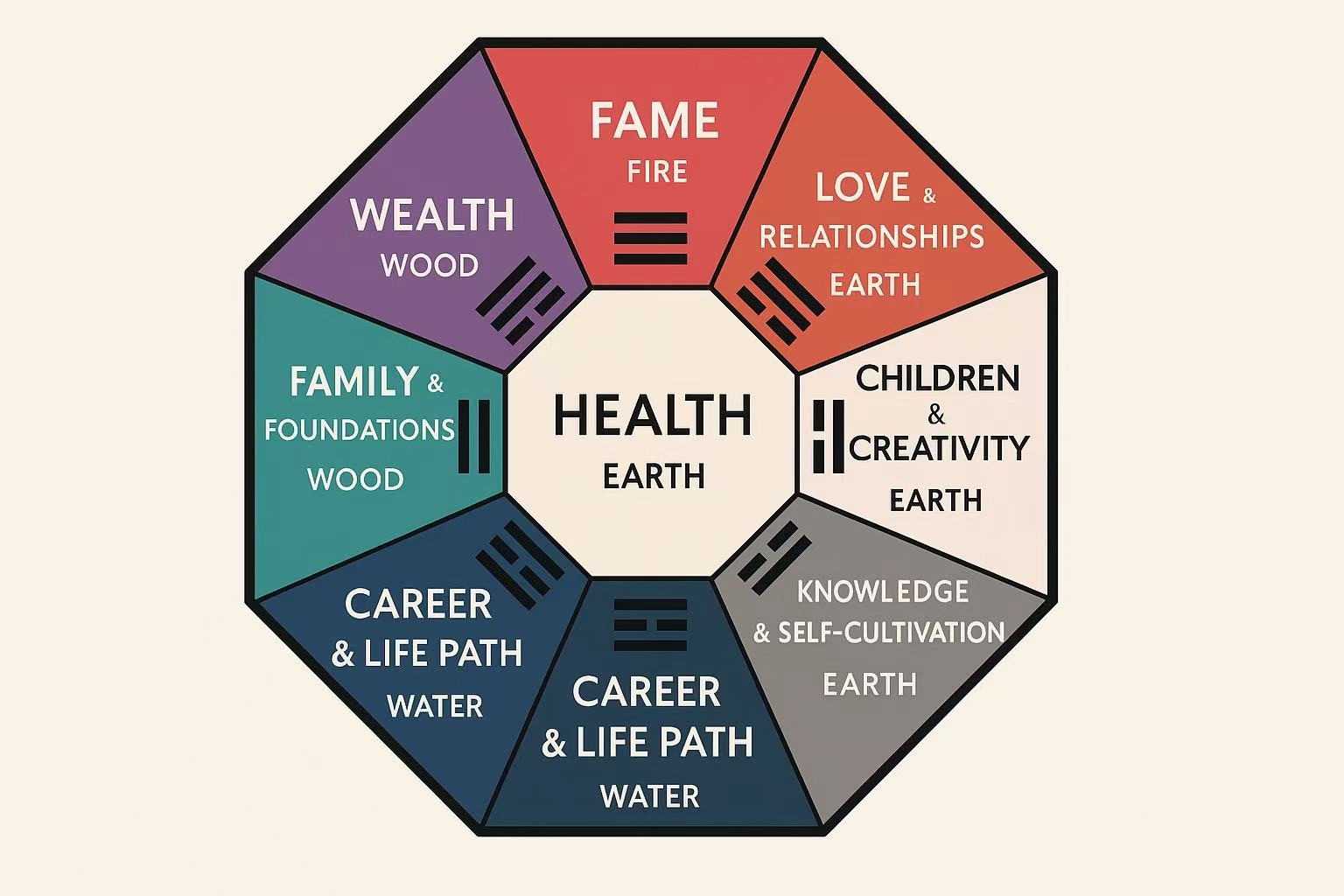
The Bagua Map is one of Feng Shui’s most powerful tools for shaping how we live, work, and feel inside our homes. Far from superstition, it functions like an energetic blueprint—organizing a room or home into nine life areas related to wealth, relationships, health, creativity, and more. Each zone is connected to a Five-Element phase, symbolic shapes, and colors that influence emotions and behavior.
In modern interiors, the Bagua serves as a practical design system. It helps us create spaces that reduce stress, support clarity, strengthen relationships, and encourage personal growth. When intention and environment align, daily life flows with far more ease.
II. The Logic Behind the Bagua Framework
The Bagua divides space into nine equal parts because it mirrors a holistic view of human life. Each gua represents one dimension of well-being, and together they form a complete picture of a balanced life.
This structure is rooted in three ideas:
Qi Flow – Energy in a home behaves like water: it can nourish, stagnate, leak, or overflow depending on design. Symbol–Environment Interaction – Colors, shapes, and materials affect our subconscious responses and emotional states. Five-Element Cycle – The cycle of Wood, Fire, Earth, Metal, and Water describes how energies support or control each other.
The Bagua is not simply a map—it is a philosophical model connecting environment, emotion, and intention.
III. Bagua Placement Methods
1. Compass Method
The traditional school aligns the Bagua with actual compass directions.
North = Career South = Fame East = Family Northwest = Helpful People
This system is ideal for stand-alone houses, landscapes, or users comfortable taking accurate readings.
2. BTB / Front-Door Method
This modern approach aligns the bottom row of the Bagua with the home’s main entrance wall—regardless of actual compass direction. It is the most practical and consistent choice for:
apartments multi-unit buildings irregular or complex layouts
3. Why Consistency Matters
Both methods work.
But using both at the same time disrupts energetic coherence.
Choose one, apply it to your entire home, and stay consistent.
IV. The Nine Bagua Areas: Meaning & Application
Below is a concise explanation of each gua, its theme, and simple ways to support it:
1. Wealth (Wood)
Themes: abundance, opportunity
Enhancers: thriving plants, natural wood, flowing lines
2. Fame (Fire)
Themes: visibility, confidence, motivation
Enhancers: lighting upgrades, candles, warm colors
3. Love & Relationships (Earth)
Themes: partnership, trust, emotional balance
Enhancers: pairs of objects, pink/earth tones, soft textiles
4. Family & Foundations (Wood)
Themes: ancestry, long-term stability
Enhancers: botanical prints, wood frames, heirlooms
5. Health / Center (Earth)
Themes: overall well-being, balance, groundedness
Enhancers: open circulation, clear floors, warm neutrals
6. Children & Creativity (Metal)
Themes: inspiration, fresh ideas, joyful expression
Enhancers: white tones, round shapes, creative tools
7. Knowledge & Self-Cultivation (Earth)
Themes: learning, mindfulness, inner growth
Enhancers: bookshelves, meditation cushions, natural ceramics
8. Career & Life Path (Water)
Themes: purpose, flow, new opportunities
Enhancers: deep blues, gentle curves, thoughtful mirror placement
9. Helpful People & Travel (Metal)
Themes: mentors, luck, guidance
Enhancers: gratitude notes, silver accents, travel images
V. The Five Elements as Design Tools
The Five Elements are the emotional “language” of Feng Shui. Each one affects mood, energy, and movement within a space.
Wood → growth, vision, vitality Fire → inspiration, passion, upward movement Earth → stability, nourishment, calm Metal → clarity, precision, completion Water → flow, depth, intuition
When decorating, you can evoke an element through color, shape, material, or symbolism—not just literal objects.
Examples:
Blue = Water Triangles = Fire Round shapes = Metal Plants = Wood Ceramics = Earth
Balancing these elements creates emotional coherence in a room.
VI. Applying the Bagua: How to Analyze Your Floor Plan
1. Define the Boundary
Include all interior, regularly used spaces.
Exclude balconies unless enclosed and functional.
2. Choose and Align the Map
Compass → use North Front-door → align with entry wall
3. Handle Missing Corners
If a gua is “notched out,” symbolically complete it with:
plants lighting mirrors (used thoughtfully) outdoor décor
4. Handle Extensions
A bump-out strengthens that gua—support it intentionally.
5. Micro-Bagua Method
Apply the Bagua to individual key rooms for finer tuning, especially:
bedroom living room office/workspace
This creates layered, harmonious energy.
VII. Practical Feng Shui by Room
1. Entryway
The mouth of Qi.
Keep clear, well-lit, and welcoming.
Add gratitude notes or metal accents for supportive energy.
2. Living Room
Encourage natural movement and conversation.
Balance Wood (plants) and Fire (warm lighting).
3. Bedroom
Support rest and partnership.
Use pairs, calm colors, and soft materials.
Avoid chaotic art and heavy under-bed storage.
4. Workspace / Office
Add Earth for stability, Water for clarity, and a strong chair.
Place a meaningful focal point on the wall you face.
5. Kitchen / Dining
Fire is already strong—balance with Earth (ceramics) and Wood (greenery).
Clear counters promote fresh daily energy.
VIII. Common Errors & Sustainable Feng Shui Habits
1. Center Clutter
Stagnates health and focus.
Solution: weekly clearing + breathable storage.
2. Overloading One Element
Too much Metal → sterile
Too much Fire → agitation
Fix through gentle rebalancing.
3. Misplaced Mirrors
Avoid mirrors facing the bed or the entry door.
They can cause energetic overstimulation.
4. Symbolism Conflicts
Stormy artwork in a bedroom or chaotic colors in a workspace can disrupt harmony.
Choose supportive imagery.
5. Simple Weekly Practice
declutter for 15 minutes refresh plants adjust lighting set a small intention
Long-term Feng Shui is built from small, repeatable habits.
Conclusion: Designing With Intention
Feng Shui is not about perfection—it is about alignment.
When your surroundings express who you are becoming, your daily life gains momentum, clarity, and emotional ease.
Start with one gua.
Make one intentional change.
Let your space gradually evolve into a supportive partner in your life journey.

Leave a Reply